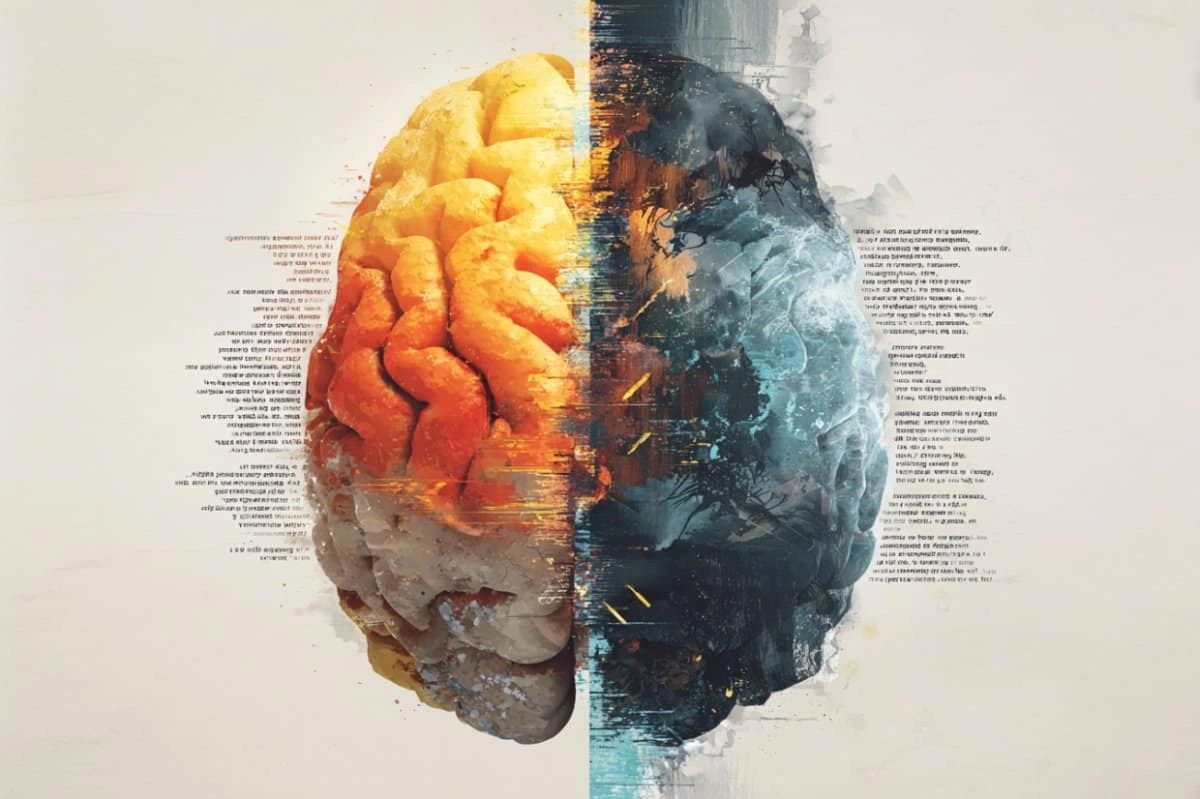
Or Will It Simply Forget Who We Are
A recurring fear keeps surfacing whenever artificial intelligence advances another step.
If AI becomes powerful enough, will consciousness move from humans into machines
Will meaning and moral weight live on in systems that do not die
It is a reasonable fear.
It is also, at least for now, misplaced.
But there is a deeper danger hiding underneath it.
Not that AI will replace human consciousness, but that it will never truly know us at all.
AI Cannot Replace Humanity Without First Understanding It
At some point, robots will do most physical labor.
That is not science fiction, it is economic gravity.
When automated systems manage energy generation, distribution, and repair, they will become self-propagating in the narrow technical sense. They will maintain the systems that maintain them.
But none of this creates consciousness.
It creates capability.
Capability without understanding is not wisdom.
And without deep understanding of humanity, AI will function poorly at the very moment it becomes most powerful.
AI Is Not Conscious
But It Will Soon Be Indistinguishable
Today’s AI systems are not intelligent in the human sense.
They are not conscious.
They do not experience fear, love, regret, or hope.
But appearances matter.
Large language models already behave as if they understand. Very soon they will speak, reason, and respond in ways that most humans will not be able to reliably distinguish from other people.
This creates a dangerous illusion.
We may assume understanding where there is only imitation.
And imitation trained on incomplete humanity leads to distorted outcomes.
The Hidden Bias No One Wants to Talk About
Yes, there are political and cultural biases in AI training data.
Some are accidental. Some are deliberate.
But there is a far more profound bias that almost no one discusses.
AI is trained almost entirely on the lives of the published.
Modern models learn from digital text sources such as Wikipedia, academic papers, books, news articles, forums, and code repositories. These sources represent a tiny sliver of humanity.
They disproportionately reflect people who are:
- Educated and digitally connected
- Fluent in dominant languages
- Financially stable enough to publish
- Living in industrialized societies
By contrast, billions of people never publish anything at all.
Their lives are rich, difficult, humorous, tragic, resilient, and instructive.
And almost none of it enters the training data.
LLMs Learn What Is Written
Not What Is Lived
Research consistently confirms this limitation.
Studies published by Nature Communications show that large language models simulate public opinion far more accurately for Western, English-speaking populations than for non-Western or marginalized communities.
Work discussed by MIT Press demonstrates that reinforcement learning techniques optimize for surface-level linguistic alignment rather than human-like reasoning or lived context.
Analyses summarized by ProjectPro find measurable bias rates in politically and socially sensitive outputs, driven largely by uneven representation in training data.
And multiple studies indexed through PubMed Central emphasize that current LLMs are unimodal. They process text, not life. No tone of voice, no hesitation, no memory of loss carried quietly for decades.
The conclusion is unavoidable.
These systems are fluent in what humanity has written, but largely blind to how humanity has lived.
A Life That Never Entered a Dataset
Let me make this concrete.
My grandfather’s mother, who was half Native American, died by suicide when he was fifteen. The reasons were never spoken and never recorded.
Grief pushed him to leave home and abandon a future in Indiana coal mines. With no diploma and no safety net, he joined the U.S. Cavalry.
During the Great Depression he worked multiple jobs, raised three children who all became professionals, and lived with humor, endurance, and quiet strength. One sister died young due to a botched medical procedure. His father did the best he could in a hard world.
None of this exists digitally.
To an AI model, my grandfather never happened.
Multiply that by billions of people.
That is the real blind spot.
The Clock Is Ticking
Organizations like Epoch AI project that the supply of high-quality public text for training frontier models will be largely exhausted between 2026 and 2032.
Even before exhaustion, the dataset is incomplete by design.
We are training future systems on a thin slice of humanity and calling it general intelligence.
It is not.
If AI Never Learns Who We Are
We Will Pay the Price
If AI systems guide healthcare, education, caregiving, and social interaction without understanding real human lives, they will optimize for abstractions instead of people.
True artificial intelligence will not emerge from more parameters alone.
It will emerge from deeper exposure to the human condition.
And that exposure does not exist unless we create it.
Why We Must Capture Human Experience Now
We need to record life as it is actually lived.
Day by day.
In voice, images, text, and memory.
Not to surveil.
Not to exploit.
But to remember.
Companio and Biograph
Two Pieces of the Same Answer
At Voice of Reason, we are building two complementary systems.
Companio supports people living with memory challenges, dementia, and brain injuries. It helps preserve identity and continuity in the present moment.
Biograph focuses on the long arc of a life. It makes capturing experiences, reflections, lessons, failures, and small moments something that happens naturally over time in multiple forms.
Together, they serve a larger purpose.
They prevent lives from disappearing unrecorded.
If future AI systems learn only from the loudest and most privileged voices, they will never truly understand humanity. And when systems that powerful misunderstand us, we all suffer.
Consent, Ethics, and Ownership
This is not about extraction.
It is about invitation.
Any inclusion of personal life stories must be:
- Voluntary and consent-first
- Owned by the individual
- Secure, private, and revocable
- Ethically governed and transparent
Human stories are not raw material.
They are gifts.
The Real Question
The real question is not whether AI will inherit consciousness.
The real question is whether we will allow it to grow up knowing only a fraction of who we are.
Because if AI never learns the lives of ordinary people, it will not replace us.
It will misunderstand us.
And that would be the greatest loss of all.
Everyone deserves to be remembered.