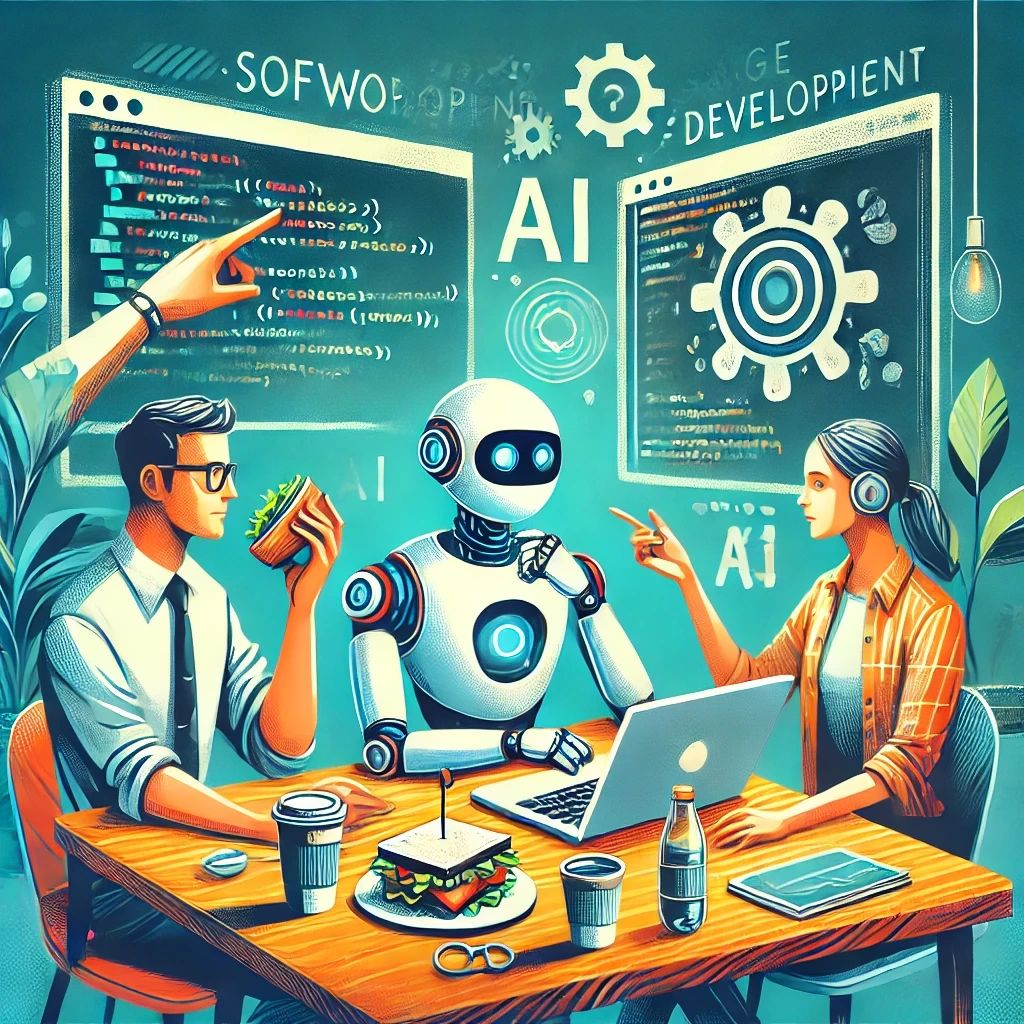
Two Sandwiches and a Robot: A New Approach to AI Collaboration
Over the past three months, we’ve been developing software with remarkable speed and effectiveness using what we call the two sandwich team approach. It’s simple: two humans, or sometimes three if you're a startup and that’s all you have. This small, nimble setup has proven to be incredibly powerful for innovation—not just for us at Voice of Reason AI, but for any company that needs to push boundaries quickly and efficiently.
Innovation doesn’t come from large teams with layers of management; it comes from one or two people who are passionate about what they’re doing, free to focus on the problem at hand without the overhead of managing large groups. We’re convinced that even for massive projects, multiple two-sandwich teams with clearly defined interfaces between their components are far more effective than the larger "two-pizza" teams popularized by Amazon. The secret? Time spent upfront. You need to define your component interfaces before coding begins. Once that’s locked down, you can unleash your two-sandwich teams to work in parallel, moving quickly and with purpose.
But what makes this approach truly revolutionary is the addition of the robot—in other words, AI.
How Do the Humans Interact with the Robot?
This is where things get really interesting. The way we interact with AI—or the robot—is very different from how you might typically use AI today. The common misconception is that AI is best used as a dictionary of facts. Most people treat AI like an oracle, asking it for answers to any question they have. But that approach is limiting and often frustrating. Here’s why: any large language model (LLM) you’re using took months to train. By the time it’s released, the training data is already several months old, which means the AI won’t be aware of the latest technologies or trends. With training cycles taking a year or more, that gap can be an eternity in the tech world.
But here’s the key: the AI’s value isn’t in providing up-to-the-minute technical specifications—it’s in its ability to help you solve problems. Instead of treating the AI like a reference tool or calculator, we’ve found far better results when we treat it as a co-developer.
When we collaborate with the robot, we don’t just ask it for facts—we work through ideas together. For example, if we have an idea for a feature, we bring the AI into the discussion on how to implement that idea. We iterate back and forth, just like we would with a human team member. It’s not just about “what can the AI tell us,” but rather “how can the AI help us think through this challenge.”
This shift in mindset—treating the robot like a colleague rather than a tool—has transformed our development process. By approaching the robot more like we interact with each other, we’ve unlocked much better outcomes.
Humans and Robots: A Unique Collaboration
So, what does this look like in practice? Our two-sandwich teams combine human creativity and technical knowledge with the robot’s ability to rapidly prototype, suggest solutions, and generate new ideas. The robot doesn’t just follow instructions—it collaborates, iterates, and adds value to the development process.
This approach allows us to move at an incredible pace, but more importantly, it leads to better, more innovative solutions. The robot helps us explore possibilities we might not have considered on our own, providing a unique perspective that often leads to breakthroughs.
In short, being human with a robot—engaging in a real collaboration—is the unique approach we offer. It’s about leveraging AI not as a fact-checker or code generator, but as a partner in the creative process.
The Future of Software Development
At Voice of Reason AI, we believe that this blend of two humans and a robot is the future of software development. The ability to innovate doesn’t come from large teams—it comes from small, passionate teams that are unburdened by bureaucracy and enabled by the power of AI.
The key is intentional, planned interaction with AI. When you treat the robot as a co-developer and give it the same attention and collaboration you would a human colleague, the results can be extraordinary. We’ve found that this approach, combined with an iterative process of testing and feedback, allows us to create groundbreaking solutions faster and more effectively than ever before.
So, whether you’re a startup with limited resources or a larger company looking for a fresh approach, consider adopting the two sandwiches and a robot methodology. It’s agile, it’s fast, and it’s the future.