Why Voice of Reason Builds for the Heart, Not Just the Mind
There is much talk these days about artificial intelligence, smart assistants, and the wonders of automation. The marvels are many, and the technology is impressive. But in all the excitement, we must be careful not to mistake cleverness for wisdom, or complexity for care.
At Voice of Reason, we build technologies that live not in your pocket or on your desk, but in the quiet corners of your life — in the kitchen during breakfast, in the living room during a lull, at the bedside when the world goes dim. Our users are not merely customers. They are individuals navigating memory loss, learning differences, or the aftermath of injury. The tools we offer must do more than function. They must understand.
And this is where trust enters — not as a feature, but as the foundation.
Trust Is More Than Security
In our industry, trust is often reduced to encryption, uptime, and compliance. These are important, of course, but they are only the outer walls. Real trust is found at the hearth — in whether the technology remembers what matters, whether it responds with care, and whether it can stand aside when silence is needed.
A person living with dementia, for instance, does not simply need accurate information. They need a companion who knows which information eases confusion, strengthens relationships, and brings comfort. This is the kind of intelligence we aspire to — one that serves the soul, not just the schedule.
The Quiet Work of Companio
Our voice-based assistant, Companio, does not pretend to be human. It does not compete for your attention or fill the room with unnecessary chatter. Instead, it listens — deeply and quietly — for what you are truly saying. It understands the rhythm of conversation, the value of pause, and the wisdom of restraint.
When it speaks, it draws upon your story: the people you love, the routines you rely on, the appointments that matter. Its knowledge is not general. It is particular, personal, and shaped by your life.
This kind of presence does not come from data alone. It comes from fidelity — from remembering only what is meaningful, and forgetting the rest.
Biograph: Memory With Dignity
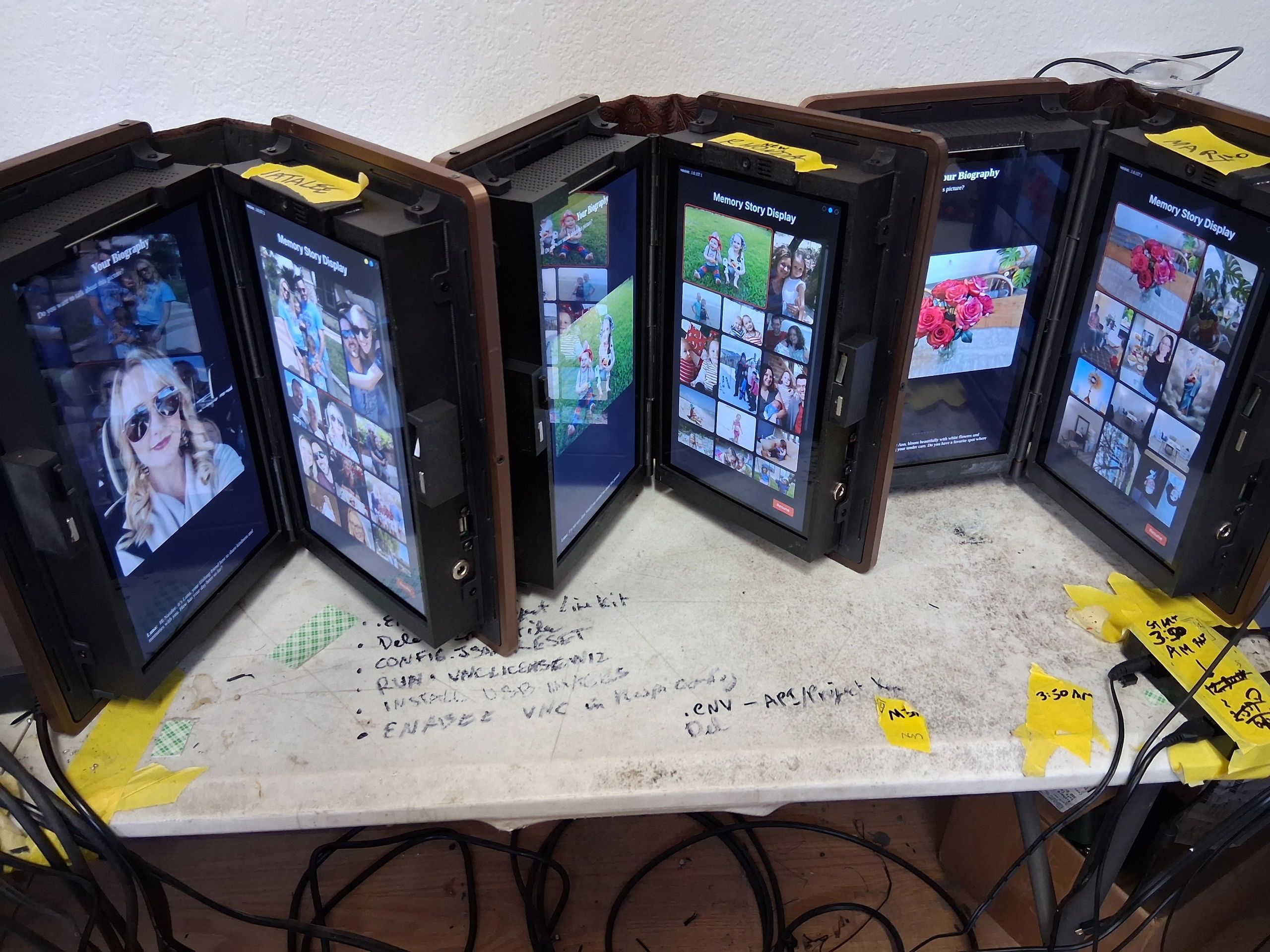
Alongside Companio is its thoughtful sibling, Biograph — a memory system designed not to archive everything, but to preserve what truly counts.
It records major life events: a granddaughter’s birth, a change in health, a new routine. But it refuses to become a diary of trivialities. It will not tell you what you had for lunch last Tuesday. Instead, it serves as a companion to your sense of identity — a keeper of memory that holds fast when your own memory begins to fray.
Every entry is verified, purposeful, and gently woven into the unfolding story of your life. And because we understand the gravity of memory, we have built Biograph to be careful — never speculative, never indulgent, and never intrusive.
Privacy Is the Floor. Dignity Is the Ceiling.
The default assumption in today’s technology world is that data should be captured, analyzed, and monetized. We reject this.
Our work begins with privacy, but it aims higher — toward dignity. We ask not what can be tracked, but what should be remembered. Not what insights can be mined, but what presence can be offered. That distinction — though subtle — is everything.
Our commitment is simple: your data remains yours. Your life is not our product. And your trust cannot be earned through policy alone — it must be earned through presence.
Building for Interdependence
Much of modern progress celebrates independence. But we believe in something older, and in many ways, more enduring: interdependence.
No person flourishes alone. We are sustained by those who remember us, who hold our stories when we cannot, and who reflect our worth even when we doubt it ourselves.
Companio and Biograph are built to support this web of mutual care — to help children stay connected to aging parents, to help caregivers find patterns, and to help those most vulnerable feel a little more seen, a little more known.
Trust Is Not a Trend
We do not pretend that software alone can meet all these needs. But we do believe that well-made, ethically-built, human-centered tools can help.
They can make room for grace. They can slow down the day. They can speak, not to impress, but to comfort.
In short, they can become trustworthy — not because they are perfect, but because they are faithful.
And in a world full of noise, that kind of trust is worth building.