A Father's WWII Memory and the Power of Preservation
When I turned 18 and was preparing to leave for college, my father told me something he’d never said before. It was brief, quiet, and delivered without ceremony—just a sliver of the iceberg that was his World War II experience.
He told me he had been in the Battle of the Bulge.
That was it. No follow-up. No detail. Just those six words.
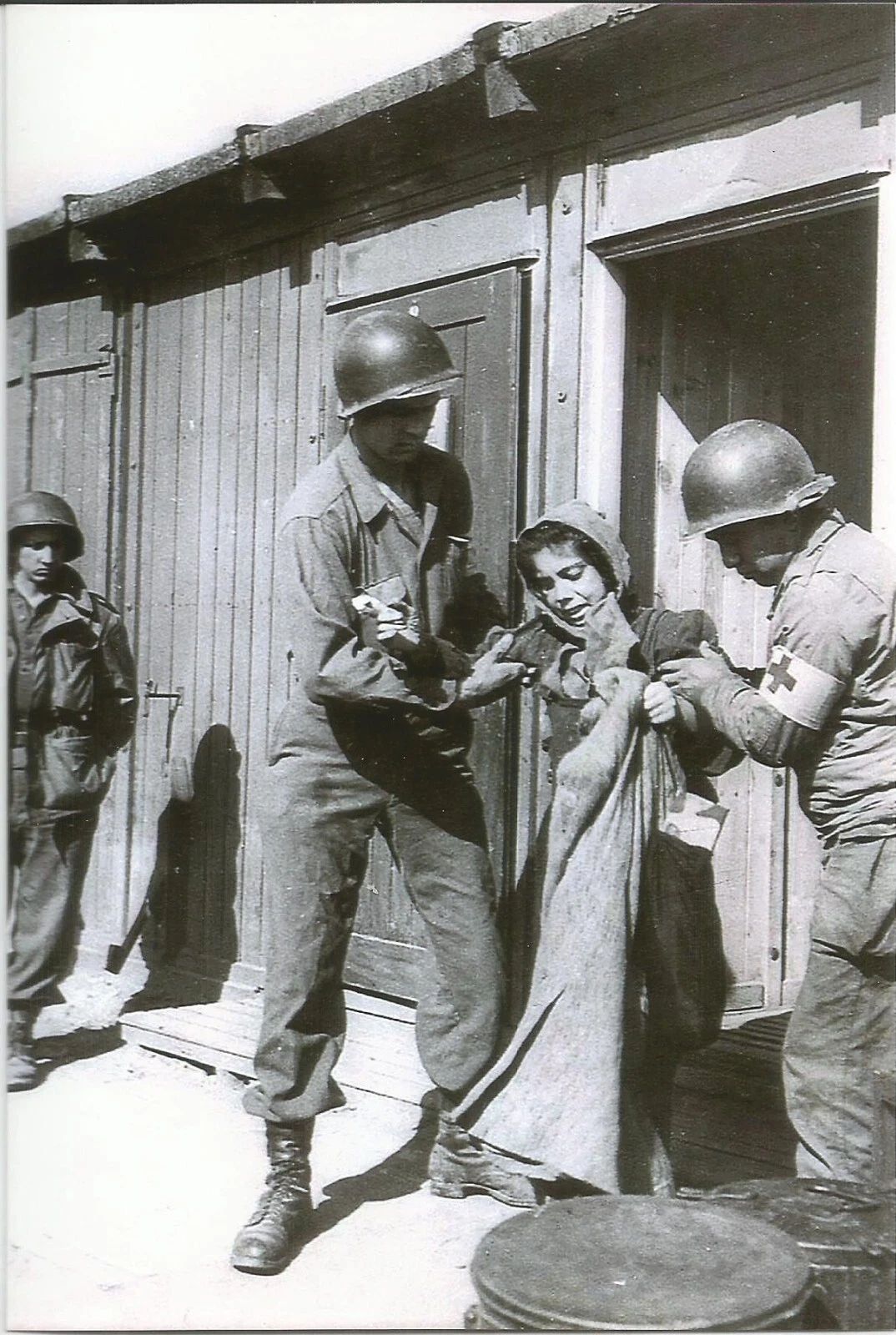
Later, as if he was handing me something fragile and too heavy at the same time, he added that his division had helped liberate a concentration camp in Zwodau, Czechoslovakia. He said:
“The women were in a really bad way. We gave them our food. I sent the family of a little girl I got to know some money after I left. You wouldn’t believe how badly they were treated.”
That was the extent of the story—two years of war, compressed into two minutes. The rest remained locked away, and I never asked again. Maybe I was too young, or maybe I understood even then that some things are buried not because they’re forgotten, but because they’re unbearable to relive.
Years later, I found a letter from another soldier who had helped liberate Zwodau. His name was John Hein—a German-born Jewish interpreter with the 1st Infantry Division. His words painted a picture my father couldn’t bring himself to share:
"They were still standing around numb and dazed… I was told that all the Jewish girls in the camp had come only a few months ago from the horror camp of Auschwitz… All their parents and sisters and brothers… had been burned in the furnaces there.”
Reading that letter was like peeking through a locked door I’d never had the key to. It confirmed what I always suspected: that my father had seen things that left marks not on his skin, but on his soul.
Not Just About the Horror
It's not just about understanding the horror of such an experience. It's about how people came through it.
How did they persevere in their wait to be rescued?
How did the soldiers change when they saw the suffering?
And what did change their lives?
These are not just emotional questions—they are essential to human progress.
Humanity won’t get better and will repeat the same cycle until it learns to learn. If the stories are lost—stories of suffering, resilience, and recovery—that learning will take too long. We cannot afford that delay.
The Memories That Could Have Been
This is where the vision of Voice of Reason becomes so powerful. Our mission—empowering people with memory challenges to live independently—is also about ensuring that the moments that matter most are never lost to time or silence.
What if, during one of those quiet afternoons in the years before his memory began to fade, a tool like Voice of Reason’s Biography Builder had been gently asking him questions? Not interrogating him, but inviting him—curating the right moment, the right tone, the right kind of safety.
What if, instead of me struggling decades later to piece together fragments of his life, there was a digital archive—a warm, living document of his memories, his words, his voice?
What if the girl in Zwodau had a name?
What if the courage it took to survive the Battle of the Bulge had a narrative, a context, a face?
A Future Where No Story Is Lost
For families touched by Alzheimer’s, dementia, learning disabilities, or brain injury, Voice of Reason is more than a technical tool. It’s a time machine. A memory keeper. A digital companion that listens with care and remembers with purpose.
If my father had this technology—if it had been there to listen quietly when he was ready to speak—his story wouldn't be scattered across a battlefield, a camp, and a hallway goodbye.
It would be whole.
And maybe, someday, a young adult preparing to leave home would discover not just a half-told tale—but a complete story of resilience, tragedy, and quiet heroism, waiting patiently in a biography they could hold in their hands.