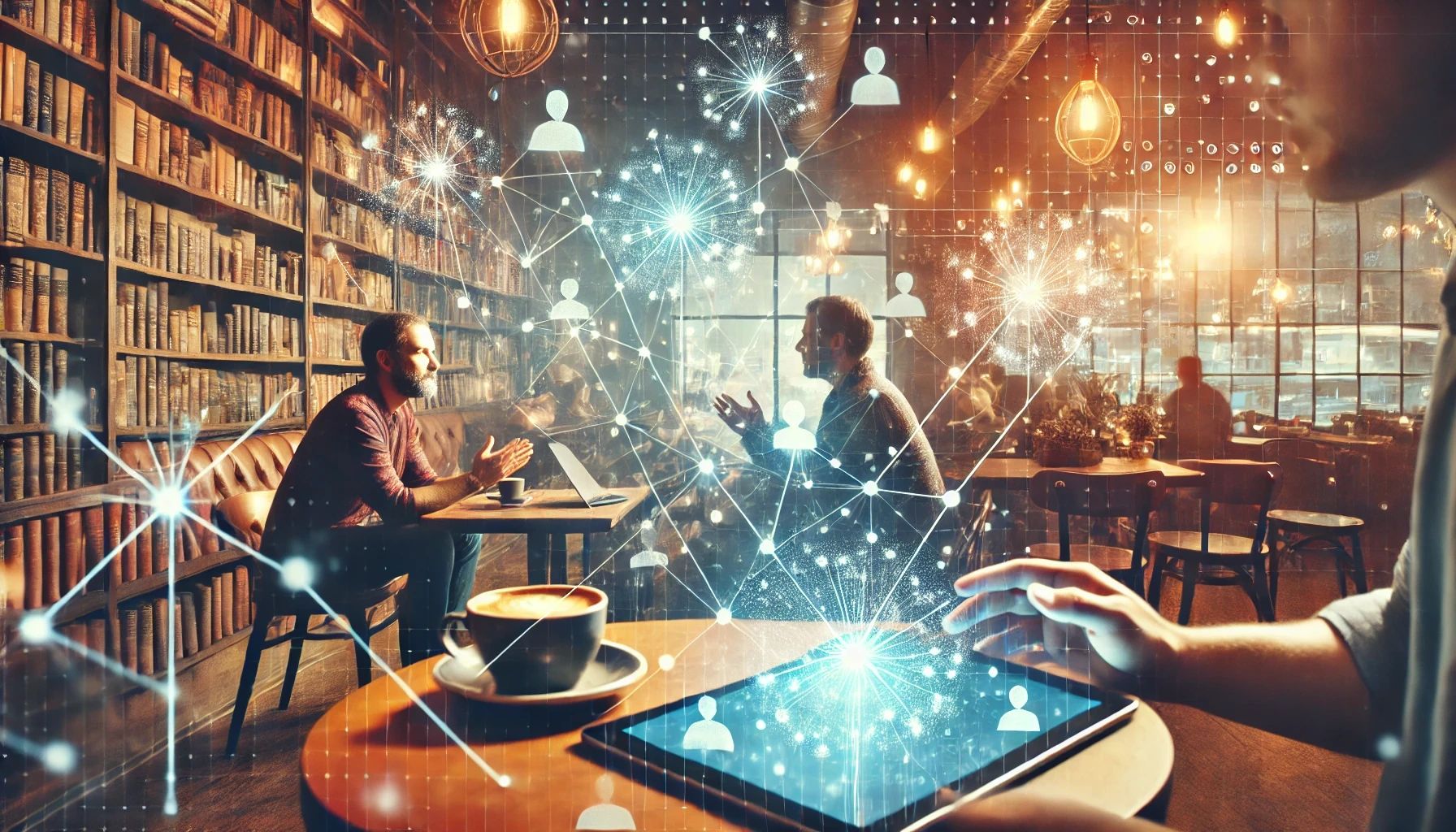
Think about how you remember things. When I mention "your last birthday," you don't just recall a single snapshot - your mind probably jumps to who was there, what you felt, maybe what went wrong, what went surprisingly well, and possibly even connects to other birthdays or similar celebrations. That's exactly what we're trying to build here - a system that remembers things the way humans do.
Let's break down how this works:
First, the "Getting Stuff In" Part: Imagine you're talking to your smart home assistant, but this one's special. You can tell it, "Hey, add a memory" and start talking about your day, show it pictures, or type something in. What makes it different is that it doesn't just store these things in folders like your typical computer. Instead, it's building what I like to call a "memory web."
The "Making Sense of Things" Part: When you share a memory, the system is like that friend who's really good at reading between the lines. It's picking up on:
- When things happened (time context)
- How you felt about it (emotional context)
- Who was involved (relationships)
- Where it took place (location)
- What important things or people were mentioned (entities)
It's like having a really attentive friend who notices not just what you're saying, but how you're saying it and all the little details you might not even realize you're sharing.
The "Filing System" Part (but it's not really filing): Instead of putting memories in folders, this system uses three clever ways to store things:
- A "Vector Store" - Think of this like a magical space where similar memories naturally drift closer together. If you tell a story about your dog playing in the snow, it automatically gets "placed" near other happy pet stories or winter memories.
- A "Graph Database" - Imagine a giant web of connections, like those detective boards with photos connected by string, but much more sophisticated. Every memory is connected to others in multiple ways - by people involved, by feelings, by locations, etc.
- A "Binary Store" - This is the simple part, just keeping the raw stuff (your actual photos, voice recordings, text) safe and sound.
The "Finding Stuff Again" Part: Here's where it gets really interesting. When you want to remember something, you don't need to remember exactly when it happened or what folder you put it in. You can just start talking about what you remember: "Tell me about that time we had ice cream at the beach..."
The system then:
- Looks for memories that seem similar to what you're asking about (using that magical vector space)
- Follows the connections in the web to find related memories you might also be interested in
- Pulls everything together in a way that makes sense
For example, if you ask about a beach day, it might tell you about the ice cream memory you specifically asked for, but also remind you that it was the same day your dog first saw the ocean, and it was right after your friend Sarah moved to town - because all these memories are connected in the web.
The Really Clever Bit: What makes this system special is that it learns connections over time, just like your brain does. Every time you recall something or add a new memory, it might strengthen existing connections or create new ones. It's constantly evolving, just like human memories do.
Think about it like this: Every memory is like a star in a constellation. Traditional computer storage is like looking at stars individually on a list. This system sees and understands the patterns between them, the constellations they form, and can even see how one constellation relates to another.
Behind the scenes, there's some pretty sophisticated technology making this happen - machine learning models for understanding emotions in speech, natural language processing to understand relationships and context, and complex similarity algorithms to find related memories. But from a user's perspective, it's as simple as having a conversation with someone who never forgets and can help you remember things the way you naturally think about them.
The end goal is to make interacting with your digital memories feel as natural as remembering things yourself - maybe even a bit better, since this system doesn't get cloudy with age or stress like human memories do!