This is actually the most powerful part of the story.
Many companies developing AI companions focus their messaging on what the AI does for the person with dementia. What you've discovered during alpha testing is something much deeper: the Companion begins helping before the loved one ever uses it.
That's not a feature. That's a revelation.
Here's a complete blog draft built around that insight.
Loneliness Isn't Just About Being Alone. It's About Not Being Needed.
When most people think about dementia risk, they think about genetics, age, blood pressure, diet, exercise, or medication.
Few think about loneliness.
Yet research increasingly shows that loneliness and social isolation are among the most significant—and most overlooked—modifiable risk factors for dementia. Studies have found that loneliness is associated with approximately a 31% higher risk of developing dementia. Even after researchers account for physical health, genetics, and other contributing factors, loneliness remains a powerful predictor of cognitive decline.
But there is something important hidden beneath the statistics.
Loneliness is not simply the absence of people.
It is often the absence of meaning.
The absence of purpose.
The absence of feeling genuinely needed.
A person can be surrounded by family members, caregivers, and activity and still feel profoundly lonely. What many people truly long for is not merely conversation. They long for connection. They long to be remembered. They long to contribute. They long to know that their stories still matter.
The human brain is fundamentally social. Throughout our lives, our identities are reinforced through relationships and meaningful interactions. Every conversation, every shared memory, every story told and retold helps strengthen the threads that connect us to ourselves and to others.
When those connections weaken, the effects can be profound.
Researchers now recognize social isolation as one of the modifiable risk factors associated with dementia. Studies have also found that individuals with a stronger sense of purpose in life experience substantially lower rates of cognitive impairment. Other research suggests that increased social engagement can significantly reduce dementia risk and even delay its onset.
Taken together, the message is clear:
Human connection matters.
Perhaps more than we ever realized.
What We Thought We Were Building
When we started developing Companion, our vision was straightforward.
We wanted to create an AI-powered system that could help individuals living with dementia, traumatic brain injury, and other cognitive challenges remain independent, socially engaged, and connected to the people around them.
The technology is designed to preserve memories, maintain biographies, retrieve meaningful life events, and help individuals navigate conversations more confidently. Through continuous conversation, memory retrieval, biography preservation, and relationship support, Companion helps people maintain continuity across social interactions rather than simply answering questions. It was built around the idea that memories are most valuable when they strengthen human relationships.
We believed Companion could help bridge the gap created by memory loss.
What we did not expect was what happened during our alpha testing.
The Surprise We Didn't See Coming
Before Companion is introduced to a loved one, caregivers spend time preparing it.
They upload photographs.
They identify family members.
They label friends.
They tell stories.
They explain relationships.
They share memories.
At first, we viewed this as setup.
Just another onboarding process.
But what we observed was something entirely different.
As caregivers worked through photographs and memories, they began reconnecting with stories they had not thought about in years.
They reflected on family milestones.
They revisited relationships.
They remembered moments that had become buried beneath the demands of caregiving.
The process itself became meaningful.
The Companion was not creating a connection.
It was helping reveal one that already existed.
The Companion as a Conduit
What happened next was even more remarkable.
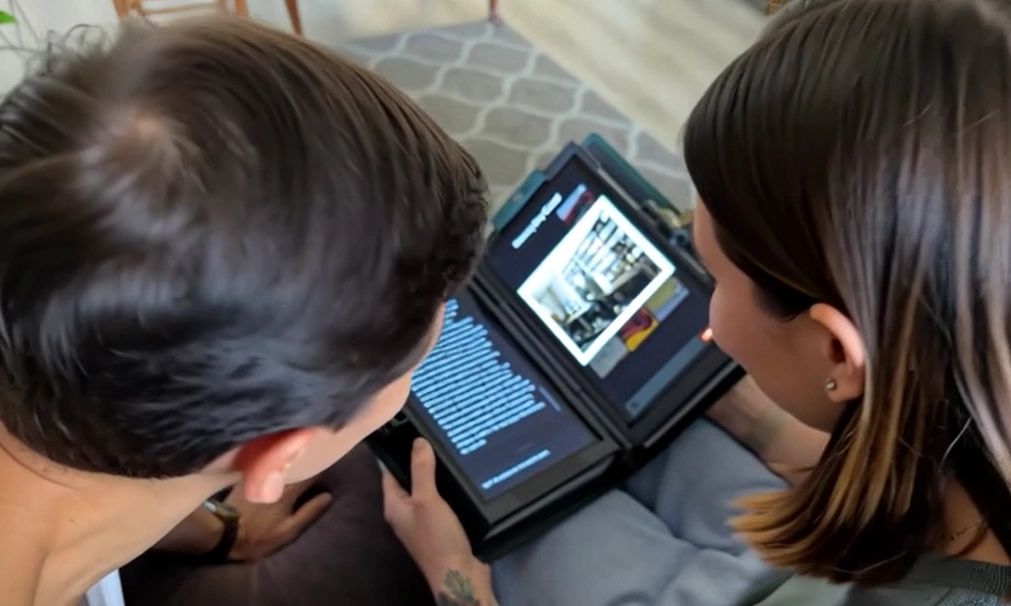
When caregivers sat down with their loved ones, they were more engaged.
The stories were fresh in their minds.
The photographs had context.
The memories had been revisited.
The conversations became richer.
The Companion wasn't replacing the human interaction.
It was amplifying it.
The device became a conduit.
A bridge.
A catalyst for connection.
Instead of asking a loved one to remember something from scratch, families could explore memories together.
Instead of struggling to find conversation topics, they could use shared photographs, stories, and relationships as entry points.
Instead of feeling isolated by the challenges of dementia, they had a tool that encouraged engagement.
Most importantly, the focus remained on the relationship.
Not the technology.
The technology simply helped the relationship flourish.
Extending Connection Across Care Teams
Another unexpected benefit emerged.
Once a family member had invested time building the Companion's knowledge, that relationship context could be shared with other caregivers.
Professional caregivers could learn important family stories.
New caregivers could understand key relationships.
Friends and family members who visited less frequently could reconnect more easily.
The Companion helped preserve continuity.
Not continuity of data.
Continuity of relationships.
Every caregiver became better equipped to engage in meaningful conversation because they had access to the stories that matter most.
The result was not a replacement for human care.
It was a multiplier for human connection.
Fighting One of Dementia's Most Overlooked Risk Factors
The more we observed these interactions, the more we realized something important.
Companion is not primarily a memory product.
It is a connection product.
Memory retrieval matters because it supports relationships.
Biographies matter because they preserve identity.
Conversation support matters because it keeps people engaged.
Every feature ultimately serves a single purpose:
Helping people remain connected to the people who matter most.
The research tells us that loneliness increases dementia risk.
The research tells us that purpose matters.
The research tells us that social engagement protects cognitive health.
What our alpha testing revealed is how those ideas come together in practice.
Connection does not happen because a machine speaks.
Connection happens because people engage.
Connection happens because families share stories.
Connection happens because caregivers understand the person behind the diagnosis.
Connection happens because someone feels remembered, valued, and needed.
That is the future we are building toward.
Not a future where AI replaces human relationships.
A future where AI strengthens them.
Because dementia is not only a battle against memory loss.
It is a battle against disconnection.
And if we want to help people live independently, safely, and with dignity, we must do more than preserve memories.
We must preserve the relationships that give those memories meaning.
That is what Companion is teaching us.
And it is one of the most encouraging discoveries we have made so far.
Companion isn't fighting dementia by replacing memory.
It's fighting one of dementia's most overlooked drivers—disconnection—by helping people stay engaged, remembered, and meaningfully connected to the people who matter most.