Structure, Reminiscence, and AI: Why Voice of Reason's Companio Is the Future of Dementia Support
A groundbreaking clinical trial recently published in JAMA has illuminated something many in dementia care have long suspected: structured support systems can significantly improve cognitive outcomes, while passive information delivery cannot. The U.S. POINTER study followed over 2,000 at-risk older adults over two years, revealing that only those who received structured, socially connected, and expert-supported interventions saw meaningful improvements in cognitive function.
This discovery doesn't just validate lifestyle medicine—it lays a scientific foundation for the next frontier: AI-enabled, personalized structure.
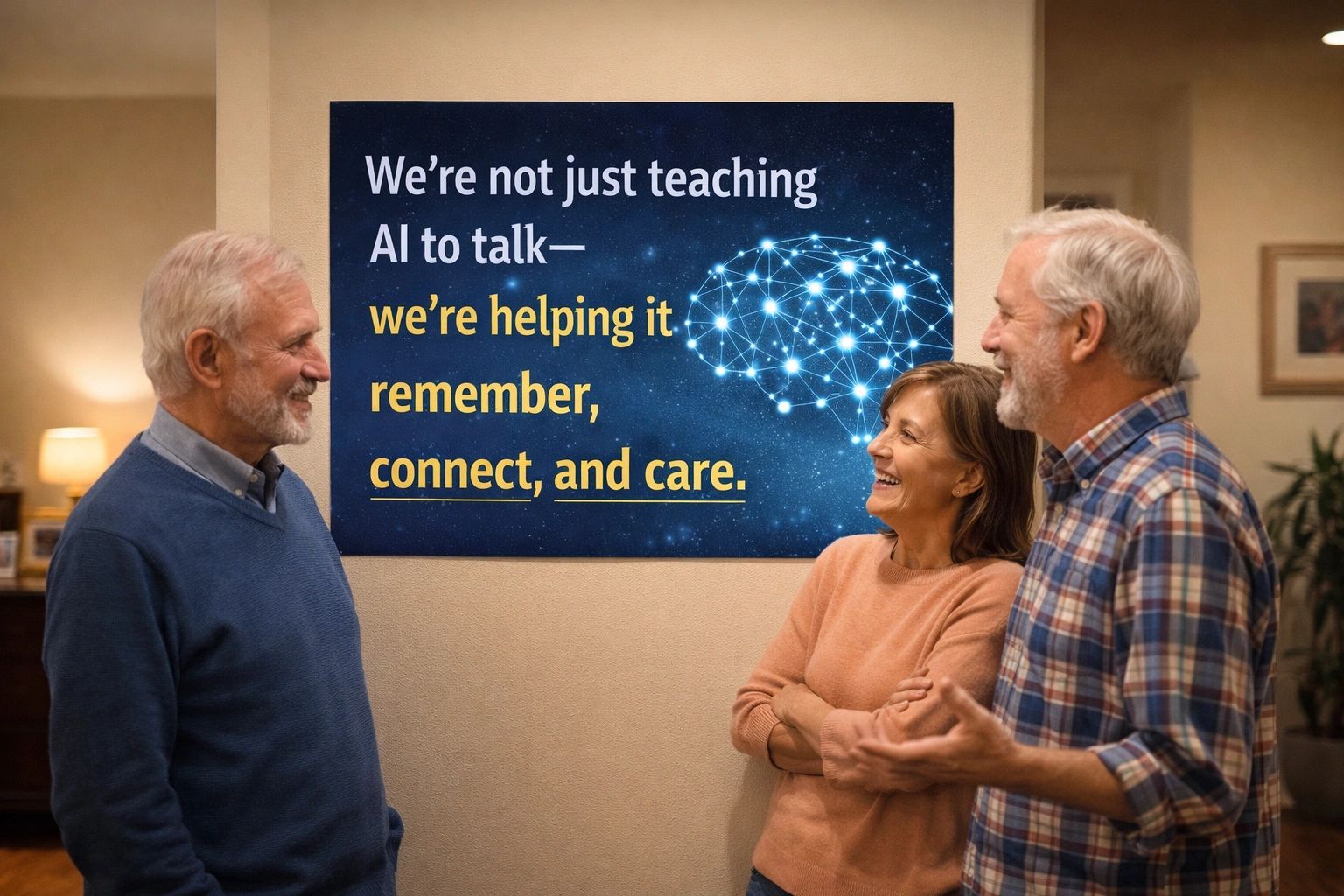
At VoiceOfReason.ai, we’ve been building this future with products like Companio and Biography—designed specifically to bring proactive, emotionally intelligent structure into the lives of individuals with dementia, traumatic brain injury, and learning disabilities. The POINTER study offers powerful support for our mission and technology.
Let’s connect the dots.
🧠 The Study: Structure Outperforms Self-Guidance
The U.S. POINTER trial compared two groups of older adults at risk of cognitive decline:
- Structured Program Group: Received exercise classes, diet coaching, cognitive training, social engagement, and medical monitoring.
- Self-Guided Group: Received the same information, but had to act on it alone.
Result: Only the structured group improved. Despite having the same knowledge, the self-guided group showed no gains.
This distinction—between knowing and doing—is everything in dementia prevention. And it's where AI like Companio shines.
🤖 Companio: A Constant, Personalized Companion with Structure Built-In
Companio is not just a chatbot. It is a proactive, ambient, and emotionally aware AI designed to help individuals navigate daily life—with structure, empathy, and memory reinforcement.
It mimics the five pillars the POINTER study found most effective:
1. Exercise with Accountability
Companio doesn’t just remind users to move—it notices patterns, recognizes hesitations, and provides timed nudges using context-aware speech. Through integration with wearable devices and home sensors, it can gently suggest movement when inactivity is detected.
“Let’s stretch together like we did yesterday morning—it seemed to help your back.”
This is not a static reminder. It is dynamic, reactive, and personal.
2. Nutrition with Conversation
Instead of presenting recipes or diet rules, Companio engages in conversation-based support:
“You mentioned Mary made salmon last night—should we add some greens to lunch today for balance?”
It's nutrition coaching delivered in the most accessible form—conversation.
3. Cognitive Engagement
At the heart of Companio is a large language model (LLM) designed to adapt conversation difficulty and context. It learns which topics stimulate the user and which ones are confusing, adjusting in real-time.
This matches the POINTER model’s progressive cognitive training, but with personalization only AI can provide.
4. Social Connection via Reminiscence Therapy
Here’s where Voice of Reason’s approach shines brightest.
Reminiscence Therapy (RT)—a well-researched technique in dementia care—involves engaging individuals in conversations about their life history. Studies have shown RT can improve mood, communication, and even cognition in those with Alzheimer’s or memory loss.
“In one study, older adults who regularly engaged in structured reminiscence therapy showed better cognitive function and reduced depression scores compared to those who didn’t” (Wang et al., 2007, International Journal of Geriatric Psychiatry).
Voice of Reason’s Biography system, powered by our memory management framework, brings RT to life by:
- Capturing verified personal memories through passive and active listening.
- Storing them in structured, timestamped narratives.
- Using retrieval-augmented generation (RAG) to bring those memories back into conversation in real-time.
Imagine this interaction:
Companio: “Philip’s daughter Emily had a birthday last week—she’s three now. Do you remember her favorite toy?”
This is not just memory recall. It’s contextual, emotionally relevant interaction, grounded in personal truth. And it happens without a therapist or a facilitator—just the AI and the user.
💾 Structured Support from Mid-Memory and Biography Systems
Companio is supported by two core innovations:
🧠 Mid-Memory System
This continuously updated file captures short-term, real-time events and conversations. Every meaningful interaction—especially those marked with RECENT_EVENTS or RAG_QUESTIONS—gets analyzed and logged based on significance, novelty, and emotional impact.
📖 Biography Engine
Validated memories from Mid-Memory are promoted into a long-term biography.txt, which is structured, deduplicated, and enriched. It's not just a data dump. It is curated life history, constantly refined and embedded into a vector store for rapid access via semantic search.
Companio pulls from these memory banks in real-time, creating conversations that are both intelligent and intimate.
🇺🇸 The National Imperative: Why This Matters Now
According to the Alzheimer’s Association, over 6.9 million Americans are living with Alzheimer’s. By 2050, this number is expected to reach nearly 13 million. Meanwhile, caregiver shortages are rising, and burnout among existing care staff is rampant.
Human-led interventions—while powerful—are not scalable. But AI can help carry the load.
“Information alone doesn't change behavior. Structure does. Support does. Accountability does.”
— Dr. Reza Hosseini Ghomi
Voice of Reason delivers that structure, support, and accountability through AI that listens, remembers, adapts, and gently guides.
And unlike apps or articles, Companio is ambient. It lives where the user lives—ready to speak, listen, and support at any moment.
🌍 From Research to Reality: Voice of Reason's Alpha Phase
As we enter a new phase of alpha testing, we are grounding our product roadmap in the principles validated by the POINTER study and decades of reminiscence therapy research.
Here’s what makes our system uniquely equipped to support at scale:
✅ Multi-LLM Orchestration: Five different AI models collaborate to manage memory, context, fact-checking, tone, and timing.
✅ Memory Validation & Deduplication: Ensures only meaningful, unique memories are retained, reducing noise and improving clarity.
✅ Embedded Biography for Long-Term Memory: Converts short-term moments into long-term knowledge to support continuity and identity.
✅ Emotionally Aware Timing Feedback: Analyzes past conversations to improve the AI’s responsiveness and pacing.
🔮 What Comes Next
The POINTER study has proven that structure beats good intentions. And reminiscence therapy has proven that personal history matters.
Voice of Reason is combining these truths with cutting-edge AI to offer a solution that is not only scalable—but deeply human.
In the face of a national caregiving crisis, Companio doesn’t just help—it remembers, supports, and uplifts.
Let’s move beyond reminders. Let’s create relationships—powered by AI, grounded in memory, and guided by structure.
The future of dementia support is structured, social, and smart. And it’s here.
🔗 Learn more about Companio and Biography at voiceofreason.ai
📣 Join our alpha testing phase and help shape the future of care.
🧠 Reimagine what it means to support memory, one structured moment at a time.
Sources:
- Baker LD et al. Structured vs self-guided multidomain lifestyle interventions... JAMA, 2025.
- Wang J. et al. Effects of reminiscence therapy on cognition and depression in elderly... Int J Geriatr Psychiatry, 2007.
- Alzheimer's Association. 2025 Facts and Figures.
- VoiceOfReason.ai internal architecture documentation.