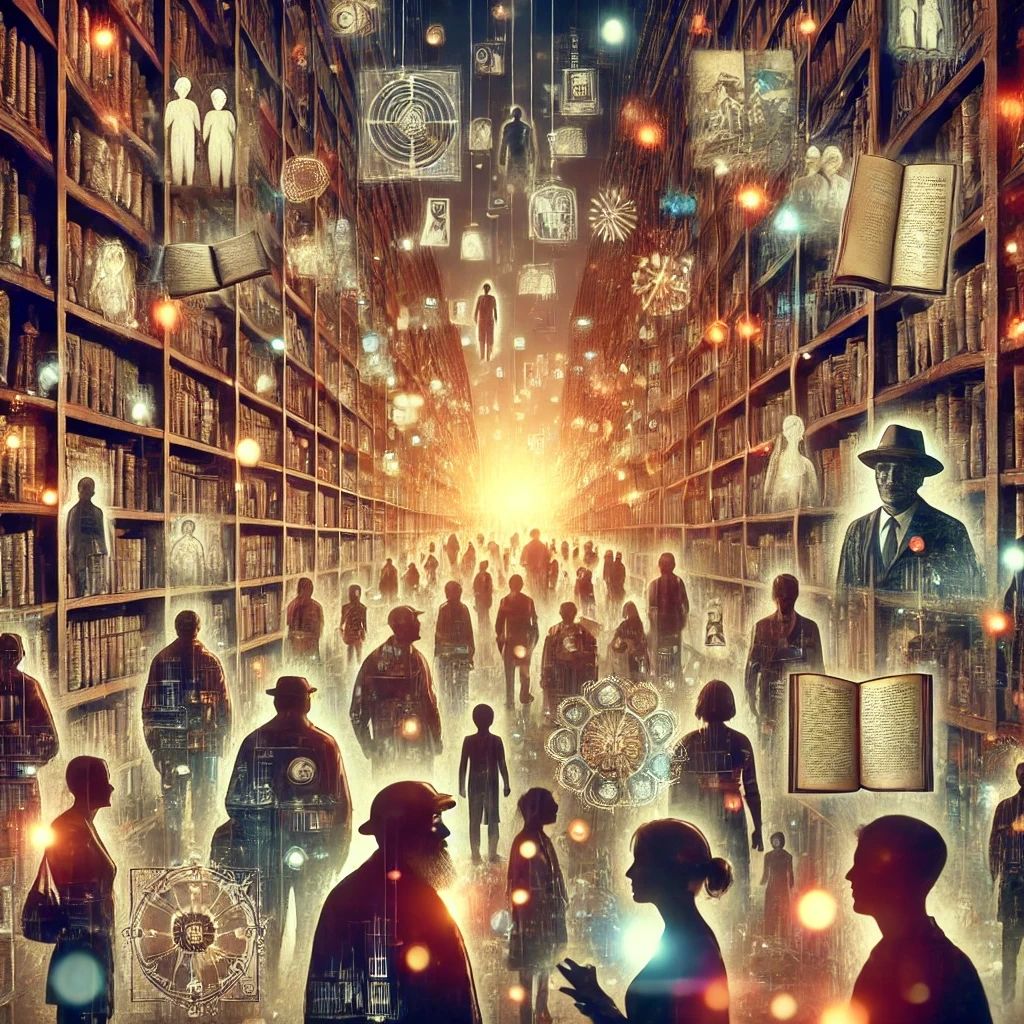
Rediscovering Unpublished Humanity: The Lifebook Project at Voice of Reason AI
Recently, I had an eye-opening conversation with someone interested in our work at Voice of Reason AI. We started discussing biases in large language models (LLMs), a topic that’s become more pressing as AI systems increasingly shape our understanding of the world. The discussion turned to the often-debated biases in AI training data—political leanings, historical rewrites, and various forms of cultural skewing introduced during the training process. But as we delved deeper, I realized there’s an even greater threat to the usefulness of AI that many overlook: the bias of published humanity versus unpublished humanity.
Think about it—most humans throughout history haven’t written books, published papers, completed doctoral dissertations, or produced vast amounts of code. They haven’t left behind polished, formalized records for future generations to study. The vast majority of people’s lives, stories, insights, and contributions remain undocumented, spoken aloud over dinner tables or remembered within family circles but never recorded. These are the voices of the "unpublished," a category that represents the overwhelming majority of humanity, yet it is drastically underrepresented in the data we feed to AI.
In our rush to build these vast knowledge reservoirs we call LLMs, we’ve inadvertently limited our sources of wisdom to those who were able or privileged enough to publish. But this published bias doesn't capture the breadth of human experience. It ignores the wisdom of those who may not have written books or invented systems but who nonetheless lived remarkable lives, overcame incredible odds, showed resilience, and acted with heroism and innovation in ways that profoundly impacted the people around them.
I’m reminded of some remarkable ancestors of mine, individuals whose stories I’ve researched and documented but who are largely unknown outside of our family. These were people who lived extraordinary lives, whose insights and experiences helped shape the person I am today. And yet, without a conscious effort to preserve their stories, these lives—along with the lessons and values they embody—risk being lost to time. Reflecting on their lives, I can’t help but think of the countless others like them whose stories go unrecorded and whose voices go unheard. It’s a loss not just for those families but for humanity as a whole.
It dawned on me during this conversation that our Lifebook project at Voice of Reason AI could be a way to reclaim and integrate the voices of the "unpublished." Lifebook is more than just a memory aid for individuals experiencing cognitive decline; it is a vessel for capturing the untold stories of ordinary people who have done extraordinary things without fame or fanfare. Lifebook enables users to document their personal histories—stories that might never be written down otherwise—and share them with family, friends, and, if they choose, even contribute to a greater knowledge base that AI can learn from.
Imagine an AI that isn’t just trained on the voices of published authors, academic researchers, and highly visible figures but on the lived experiences of a far broader range of individuals. Imagine an AI that understands the depth of human experience, from everyday struggles to quiet acts of courage, from small-town ingenuity to the resilience displayed by unsung heroes. Lifebook allows people to tell their stories, preserving wisdom that might otherwise be lost and, if they choose, contributing that wisdom to AI systems that are hungry for a broader understanding of what it means to be human.
I’m thrilled at the thought that Lifebook could play a role in democratizing the knowledge base of AI. By gathering life stories, insights, and personal histories from a diverse group of people, Lifebook offers the potential to address a major gap in AI training. It allows ordinary people to contribute to the collective human story, giving them a voice in the shaping of AI that will, in turn, shape our understanding of the world.
This isn’t just an add-on feature; it’s a way to change the very foundation of how we train AI. Because if LLMs continue to grow without the input of the "ordinary" people who have lived through extraordinary events—those who built communities, nurtured families, overcame adversities, and solved problems in their own unique ways—we all stand to lose. The AI of the future could miss out on the very wisdom that makes us human.
Our Lifebook, along with other products at Voice of Reason AI, represents a bridge to that overlooked humanity. It captures not just facts and timelines but the heart and soul of personal stories. It allows these stories to be shared, remembered, and even contribute to a future where AI systems are enriched by a fuller, more nuanced picture of the human experience. Our other products, like the VOR Oracle and Audio Aids, continue this mission by supporting memory recall and daily engagement, but Lifebook, in particular, has the potential to become a cornerstone in preserving a more inclusive and representative human legacy.
As we move forward, I invite anyone who shares this vision to join us. Whether you’re a potential user, a family member, or someone interested in the future of AI, consider the stories you know that could be lost. Consider the ordinary people in your life whose experiences are, in truth, extraordinary. With Lifebook, we have a chance to preserve these voices, bridging the gap between the published and unpublished, and ensuring that AI reflects the full spectrum of human wisdom.