Memory Is More Than Recall: How Companion and Biographer Help Preserve the Stories That Make Us Who We Are
When people think about memory loss, they often imagine forgotten names, misplaced keys, or missed appointments.
But memory is far more than information retrieval.
Memory is how we understand who we are. It shapes our relationships, our confidence, our routines, and our sense of identity. As cognitive science increasingly shows, memory is not a perfect recording device. It is influenced by personality, emotions, habits, and the experiences that matter most to each individual.
Some people naturally remember emotional moments in vivid detail. Others focus on facts, routines, and structure. Some build rich narratives connecting events across decades, while others remember life through relationships and feelings.
This understanding is transforming how we think about AI-assisted memory support.
At Voice of Reason, our Companion and Biographer products are designed around a simple belief:
The goal is not to remember everything. The goal is to help people retain the memories that matter most to them.
Personality Shapes Memory
Research into the Big Five personality traits demonstrates that different people encode and retrieve memories differently.
Highly conscientious individuals often retain details, schedules, and routines. People with high openness tend to form broader associations between experiences and create richer personal narratives. Emotionally sensitive individuals may remember emotionally charged events more strongly than everyday occurrences.
This means that two people can experience the same event and remember it in completely different ways.
Traditional technology treats every memory as equally important.
Human memory does not.
The stories we tell ourselves about our lives are shaped by our personalities, relationships, values, and emotional experiences.
To support memory effectively, AI must recognize these differences.
The Companion: Reinforcing Memory Through Everyday Conversation
The Companion is designed to support people living with dementia, traumatic brain injury, learning disabilities, and age-related cognitive decline through natural conversation.
Rather than simply answering questions, Companion actively helps reinforce meaningful memories during daily interactions.
When a family member visits, Companion can gently connect current conversations with important life events. When discussing hobbies, family, or routines, it can surface relevant experiences that strengthen existing memory pathways.
This is not about correcting people or testing their recollection.
It is about creating opportunities for retrieval and reinforcement.
Decades of cognitive research show that retrieving memories strengthens them. Every time a meaningful memory is revisited, the brain has another opportunity to reinforce those neural connections.
Companion helps create these moments naturally.
For someone who values family relationships, conversations may emphasize grandchildren, anniversaries, and shared experiences.
For someone whose identity is deeply connected to their career, Companion may reinforce accomplishments, professional milestones, and lifelong expertise.
The result is a personalized memory support system that adapts to the individual rather than forcing every person into the same model.
The Biographer: Building a Living Life Story
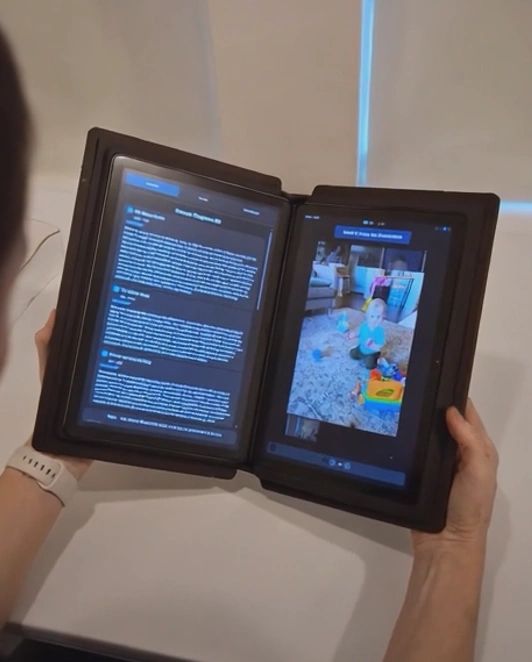
While Companion focuses on day-to-day support, Biographer focuses on preserving and organizing a lifetime of experiences.
Biographer continuously captures meaningful stories, family history, personal milestones, preferences, and important relationships.
As memories are shared, they become part of a growing life narrative.
Over time, this creates something more valuable than a database.
It becomes a living biography.
This biography serves multiple purposes.
For individuals, it helps preserve personal identity and provides a foundation for future memory reinforcement.
For families, it creates a lasting record of stories that might otherwise be lost.
For caregivers, it provides context that supports more meaningful interactions.
Most importantly, Biographer captures memories while they can still be shared in the person's own voice.
Every story recorded today becomes a resource that can strengthen memory retention tomorrow.
Memory Retention Through Guided Recall
One of the most promising areas of cognitive support is guided recall.
Rather than presenting information directly, guided recall encourages people to retrieve memories themselves through prompts, questions, and contextual cues.
This approach mirrors how human caregivers naturally support memory.
A daughter might ask:
"Do you remember the camping trips you used to take with Michael?"
A friend might say:
"That reminds me of your trip to Paris."
These conversational cues help activate existing memories instead of replacing them.
Companion and Biographer are designed to work together in the same way.
Biographer captures the stories.
Companion helps revisit them at appropriate moments.
Together, they create a cycle of memory reinforcement:
- Capture meaningful experiences.
- Organize them into a personal life narrative.
- Surface them during relevant conversations.
- Encourage natural recollection.
- Strengthen retention through repeated engagement.
The objective is not to become the person's memory.
The objective is to help preserve and strengthen the memory they already have.
Supporting Independence and Identity
For people living with dementia or cognitive challenges, losing memories often means losing confidence.
When someone struggles to recall names, events, or personal history, social interactions can become stressful. They may withdraw from conversations or avoid situations where they fear embarrassment.
Memory support should therefore do more than provide facts.
It should help people remain connected to their identities.
By reinforcing meaningful memories, preserving life stories, and supporting natural conversation, Companion and Biographer help individuals participate more confidently in daily life.
They help preserve not only information, but the stories, relationships, and experiences that define a person.
Building Technology That Respects Human Memory
Human memory is not perfect.
It is emotional, selective, and deeply personal.
The future of cognitive support is not about creating systems that remember everything. It is about creating systems that understand what matters most to each individual and helping those memories remain accessible for as long as possible.
Companion and Biographer were built around that vision.
Together, they help transform memory support from passive storage into active reinforcement, empowering individuals to maintain independence, preserve identity, and remain connected to the people and experiences that define their lives.
Because preserving memory is ultimately about preserving the person.