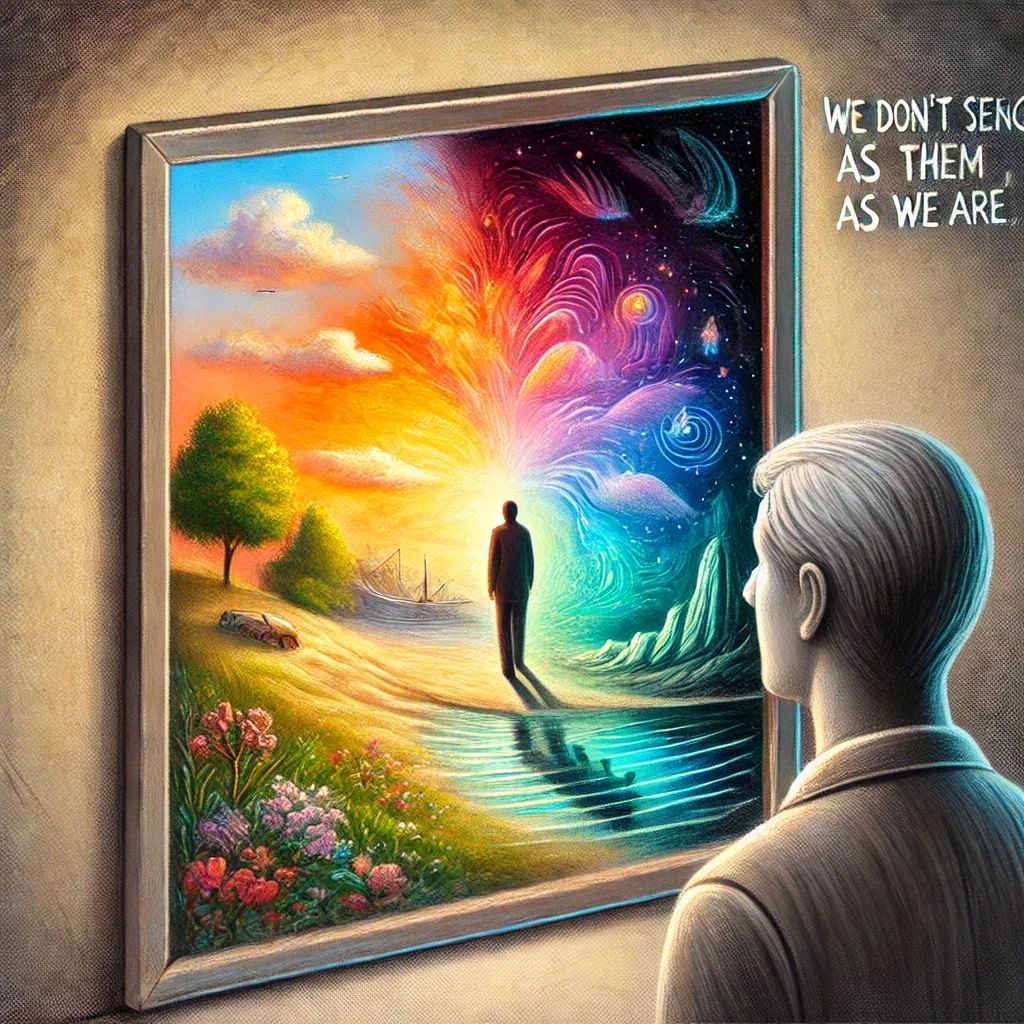
When we say we’re building AI companions, not assistants, we mean it.
For Voice of Reason, the mission has always gone deeper than function—it’s about fostering connection, especially for those navigating memory loss, cognitive disability, or emotional fragmentation. But there’s a critical gap most conversational AI still hasn’t bridged: their memories, even when accurate, don’t feel human. That’s more than a UX problem. It’s the core challenge of building a true AI companion.
Today, we’re taking a deeper look at how our newest memory infrastructure—rooted in the psychological Big Five personality traits—pushes us closer to that goal. Not because it sounds more human, but because it reacts more human. And that difference could be life-changing. Check out this great article on the subject by Tim Schukar: https://www.linkedin.com/pulse/personality-affects-your-memories-tim-schukar-vkvec/?trackingId=%2BSd8RPh696Wz8kCT46CzjQ%3D%3D
1. Human Conversation Isn’t Just Human-Sounding—It’s Human-Driven
Too often, AI systems evaluate dialogue by fluency, relevance, or even empathy scores. But what they miss is the nuance of why we say what we say.
Take, for example, our Biographer and Companion products. They’re designed to walk alongside a person through time, holding memories, guiding decisions, and sometimes even comforting. These are not transactional interfaces. They’re relational.
And real relationships rely on deep memory—the kind that connects the present to the distant past, the spoken to the unspoken. This isn’t a matter of just remembering facts; it’s about understanding what memories matter and how to use them with emotional intelligence.
2. The Difference Is in the Reaction
Let’s take an example.
A user talks about roses.
An AI with traditional RAG (retrieval-augmented generation) might find the last time the user mentioned roses and reply: “Yes, you said you planted red roses last month.”
A better AI might search the person’s memory and say: “Your wife loved roses, didn’t she?”
But the Companion we’re building could go one step further:
“You know, 20 years ago you mentioned roses were part of your anniversary celebration. That sounded like a happy time. What made that day so special?”
What’s happening here isn’t just retrieval—it’s human-style narrative linkage. The AI recognizes not just “roses” as a keyword but the emotional landscape that trails behind it. It sees not only the event, but the person’s habits of remembering—how they associate, how they lean into (or avoid) certain kinds of memories.
This is what we mean by the reaction being different. It's not just that the system retrieved a memory. It's that the choice of memory and its emotional timing reflect human-like intuition.
3. So Far, That Milestone Hasn’t Been Reached
Across the AI industry, we still see memory implemented as a lookup table or a recall pipeline. It’s powerful—but limited. The emotional use of memory remains a frontier, largely untouched.
That’s where our latest system diverges. Inspired by research on the Big Five personality traits, we’ve begun shaping memory behavior not just around facts, but around how different personalities remember and respond to the world.
For example:
- A high-neuroticism user might fixate on negative experiences, so our system weights retrieval toward balance or hopeful reframing.
- A highly open personality might appreciate creative, even tangential memory links—like associating roses with a Paris trip because the hotel had the same flowers.
- A conscientious person might rely on precise, time-anchored recall, and the system should adapt to that too.
By modeling these dispositions—skepticism, empathy, literalism—our Companion becomes less like a search engine and more like a thoughtful friend.
4. Why It Matters: The Psychology of Memory Is Social
Humans don’t remember everything. We remember what we need to, what we love to, or sometimes what we can’t help but dwell on.
And we use those memories strategically in conversation. When a friend is down, we might bring up a distant, joyful memory not because it’s contextually precise—but because it uplifts. Or because it shows we know them.
This subtle mechanism is what we’re teaching our AI to do: memory not as a mirror, but as a bridge.
We want to ensure the AI maintains continuity, filters noise, and elevates memories based on significance—not just recency. And through personality-aware processing, it adjusts how and when to recall.
It’s not just “do I remember this?”
It’s “should I say this now, in this way, to this person?”
5. The Biographer and Companion Reimagined
Here’s what this means for our core products:
- Biographer becomes more than a passive archive. It starts participating—gently reminding, contextualizing, connecting emotional dots in real-time. The memories it surfaces can now shape moments, not just summarize them.
- Companion steps beyond call-and-response. It begins to steer conversations—not forcefully, but with the soft guidance of someone who knows you deeply. It remembers how you felt, what you smiled about, and which silences meant more than words.
This doesn’t just help those with memory impairments. It models the kind of relational intelligence that anyone—elderly, isolated, or simply overwhelmed—could benefit from.
Final Thoughts: Memory as a Form of Love
When a human brings up a story from decades ago, unprompted, we see it as affection. It means they remembered. It means they know us.
If we want our AI companions to truly support, comfort, and connect, they must do more than remember correctly.
They must remember meaningfully.
They must remember like we do.
And now, with personality-aware memory and narrative reasoning, we’re starting to build that future—one that doesn’t just sound human, but feels it.
Voice of Reason: Creating Memory That Cares.