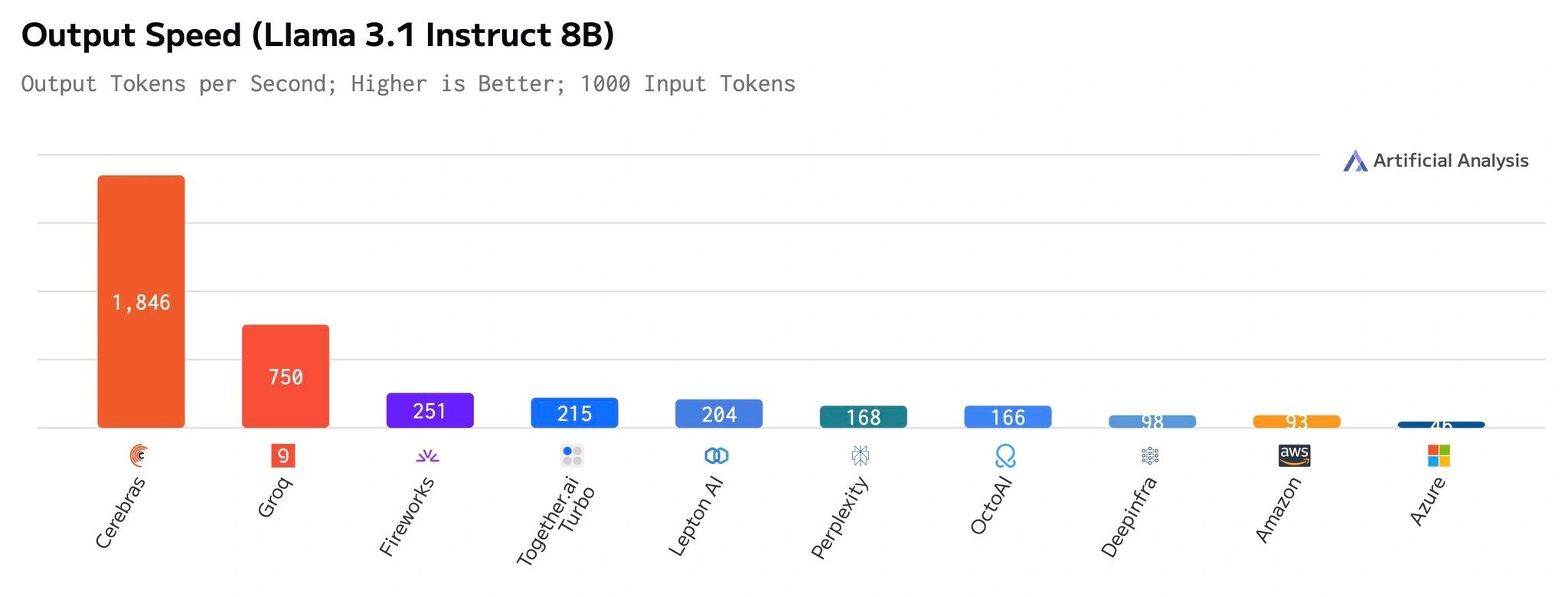
The Cerebras Wafer Scale Engine (WSE) has recently set a new record for AI inference, processing an impressive 40 trillion tokens per second. This achievement demonstrates the WSE's exceptional capability to handle vast amounts of data and perform complex computations at unprecedented speeds. For companies like Voice of Reason, which focuses on developing AI aids for people with brain disabilities, this technology presents transformative opportunities.
Accelerating AI Model Training for Personalized Care
Voice of Reason's mission to empower individuals with brain disabilities relies heavily on advanced AI models that can understand, predict, and respond to the needs of users in real-time. Traditional AI chip architectures often face limitations when training deep learning models, especially those requiring high computational power and memory bandwidth. The Cerebras WSE, however, offers a unique solution to these challenges with its 2.6 trillion transistors and 850,000 cores. This configuration not only accelerates the training process but also allows for the development of more sophisticated models capable of providing personalized and adaptive support to users.
Enhancing Real-Time Inference and Responsiveness
One of the most critical aspects of AI aids for cognitive impairments is their ability to deliver real-time assistance. Whether it's providing timely reminders, contextual conversation support, or task guidance, the responsiveness of the AI system can significantly impact user experience. The recent record set by Cerebras in AI inference demonstrates the WSE's potential to enhance real-time AI applications. By processing 40 trillion tokens per second, the WSE enables AI models to analyze and react to user needs more quickly and accurately, offering a more seamless and effective experience for individuals with brain disabilities.
Reducing Development Costs and Time to Market
Developing AI solutions for brain disabilities requires significant investment in time and resources, especially when working with traditional hardware that may not be optimized for AI workloads. The Cerebras WSE's efficiency in training and inference allows companies like Voice of Reason to reduce both development costs and time to market. Faster training cycles mean more iterations and improvements can be made in a shorter timeframe, leading to better, more refined AI aids that can adapt to the evolving needs of users with cognitive impairments.
Expanding the Scope of AI-Driven Cognitive Support
With the power of the Cerebras WSE, Voice of Reason can explore new frontiers in AI-driven cognitive support. The ability to process massive datasets in real-time enables the development of AI models that not only respond to current needs but also predict future requirements. This predictive capability could be crucial in designing aids that anticipate the needs of users, providing proactive support that helps maintain independence and quality of life for individuals with cognitive impairments.
Conclusion
Cerebras' Wafer Scale Engine represents a paradigm shift in AI hardware, offering unprecedented computational power and efficiency. For companies like Voice of Reason, this technology could be the key to unlocking new possibilities in the development of AI aids for people with brain disabilities. By leveraging the capabilities of the WSE, Voice of Reason can enhance the quality and effectiveness of its solutions, driving forward its mission to create a safer, more supportive world for all.
For more information on Cerebras' recent achievements, check out the LinkedIn post.