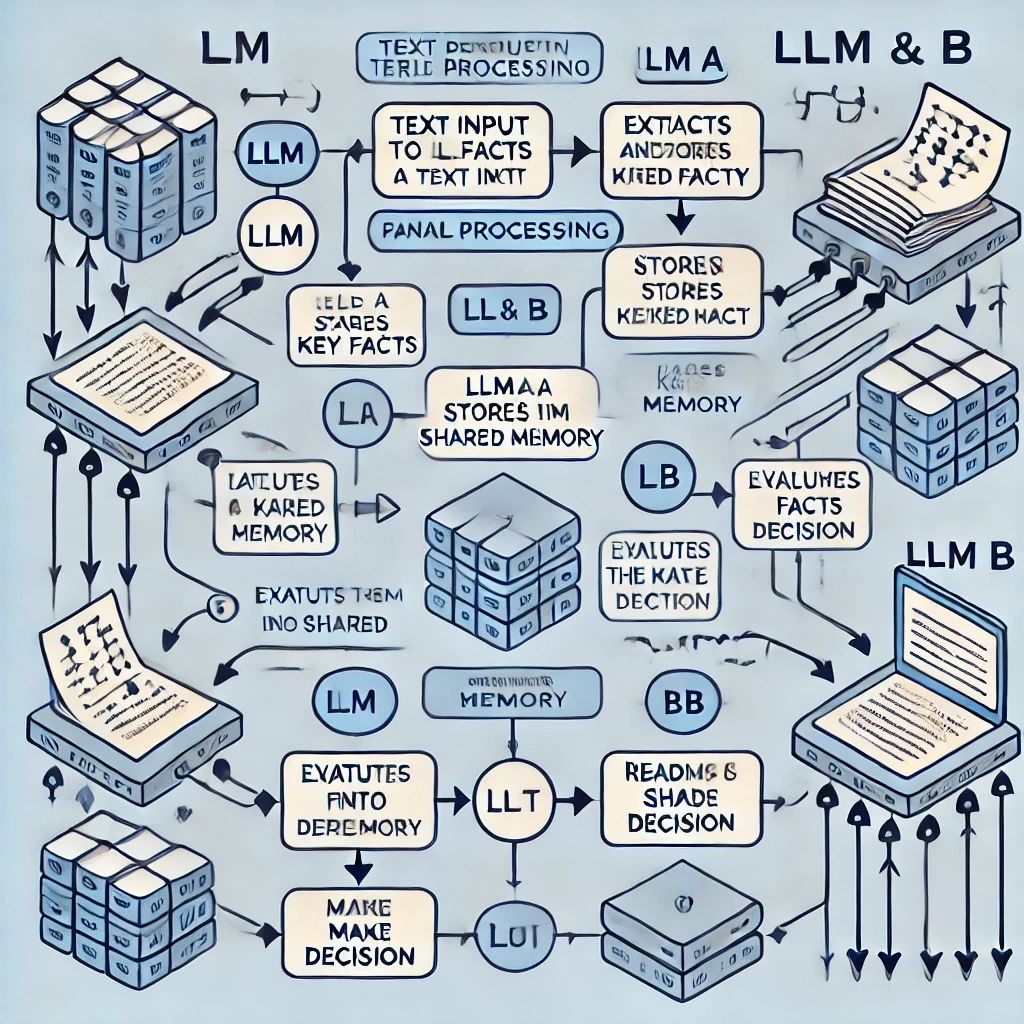
At Voice of Reason AI, we are constantly pushing the boundaries of technology to help individuals with cognitive challenges, particularly those in the early stages of Alzheimer’s disease. Social interaction is one area where we can make a meaningful difference, as it has been proven to help slow cognitive decline. In this post, we’ll explore how the design of a parallel LLM (large language model) system, leveraging multiple AI processes running simultaneously, can help us meet the product requirements for an AI-powered social interaction assistant.
Why Social Interaction Matters for Alzheimer’s Patients
Social interaction plays a critical role in the mental well-being of individuals with Alzheimer's. Research shows that maintaining active social lives helps delay cognitive decline, while social isolation has been linked to a 40% increased risk of dementia. Therefore, a system that helps users maintain their social interactions could significantly improve their quality of life. At Voice of Reason AI, we envision a tool that can empower users during conversations by providing contextual support, memory prompts, and emotional insights.
The Parallel LLM Design for Enhancing Social Interaction
To achieve the goals outlined in our product requirements, we propose a parallel LLM architecture with two distinct processes:
- LLM Process A: This AI function specializes in fact extraction. For users with early-stage Alzheimer’s, remembering key facts about their social environment—names, places, and previous conversations—can be a challenge. LLM A continuously analyzes incoming conversation data, extracting key facts and figures in real-time. For example, it might extract the name of a conversation partner or key details about a topic they are discussing. These facts are stored in a shared memory system, allowing the AI to recall them as needed.
- LLM Process B: This AI process focuses on evaluating the conversation in real time and determining how to best assist the user. LLM B not only evaluates the live conversation but also queries the shared memory built by LLM A to offer personalized suggestions, prompts, and guidance. It might suggest relevant topics based on what the user knows about the person they are talking to, or subtly prompt the user if they appear to be struggling to recall a key fact.
How This Design Supports Alzheimer’s Patients
The parallel LLM system offers several features that align directly with the product requirements for our social interaction assistant:
- Memory Augmentation: One of the most challenging aspects of social interaction for Alzheimer’s patients is remembering key details about their conversation partners. By having LLM A focus on fact extraction and storage, our system can discreetly remind users about names, past interactions, or relevant facts, empowering them to stay engaged in conversations.
- Real-Time Assistance: LLM B evaluates both the conversation and the user’s needs in real-time. It can prompt the user with helpful suggestions when it senses they need assistance, such as a gentle reminder about a topic they were discussing earlier. This ensures the user stays confident and engaged, making the interaction more meaningful.
- Emotion and Context Awareness: As part of the system’s potential enhancements, we can incorporate emotion recognition to allow LLM B to pick up on emotional cues. This helps the user respond more appropriately in social settings, further reducing the risk of social isolation.
Seamless Integration with Ambient Intelligence
The proposed parallel LLM system fits seamlessly into our broader vision of an ambient AI-powered assistant. This design can run in the background, analyzing conversations and offering assistance without disrupting the user’s daily life. By using sensors and real-time language processing, the system can adapt to the user's unique social environment, providing unobtrusive, contextually relevant help when needed.
Benefits of the Parallel Design
- Increased Efficiency: By running two AI processes in parallel, we ensure that fact extraction and decision-making occur simultaneously. This minimizes delays in providing assistance to the user.
- Personalized Interaction: Since LLM B evaluates both the real-time conversation and the stored memory, it offers a more tailored experience, making the AI feel more intuitive and supportive for each user’s specific needs.
- Memory Support Without Overload: The shared memory system allows the AI to store key facts for immediate recall, so the user never feels overwhelmed with information. The system remains subtle and supportive, rather than intrusive.
Addressing Privacy and Usability Concerns
We understand that privacy is a significant concern when designing such a system, especially for vulnerable users. The parallel LLM system can be developed to process all data locally, ensuring that sensitive user information is not exposed to the cloud. Additionally, the user interface will rely primarily on subtle cues like audio prompts or haptic feedback, ensuring that the system remains unobtrusive and easy to use.
Conclusion
At Voice of Reason AI, we are committed to developing innovative products that improve the quality of life for individuals with early-stage Alzheimer’s. Our parallel LLM system design aligns perfectly with the requirements for enhancing social interaction, helping users remain socially active and engaged. By integrating memory augmentation, real-time assistance, and emotional awareness, this system can empower users to navigate social interactions more confidently and meaningfully.
As we continue to develop and refine this product, we remain focused on the needs of our users, aiming to create a system that truly enhances social connectivity while maintaining user dignity and privacy. With ongoing testing and feedback from healthcare professionals, we believe this solution can become a valuable tool in combating the isolation and cognitive decline associated with Alzheimer’s.