At voiceofreason.ai, we're developing products to help people with memory loss, autism, and other challenges live more independently and interact more confidently. And here's the thing: our job is not to write code, design circuits, or create clever UIs. Our job is to help people. That’s the core of what we do.
Having spent the last three months coding hands-on for 12 hours a day, I’ve come to appreciate a phenomenon I’ve seen for years while working with teams. There’s an almost magnetic pull toward the act of coding. Writing a piece of code and seeing it work is addictive. When the code runs as intended, you get that sweet endorphin rush. It doesn’t matter if the code actually helps the user — you still get the high.
And that’s where the trap lies.
It’s so easy to fall into coding for code’s sake. To get lost in solving abstract technical problems and forget the real-world problems you're supposed to be solving. It's a phenomenon I believe is plaguing much of tech in America right now.
So, Are You a Coder or an Engineer?
In my world, I make a distinction:
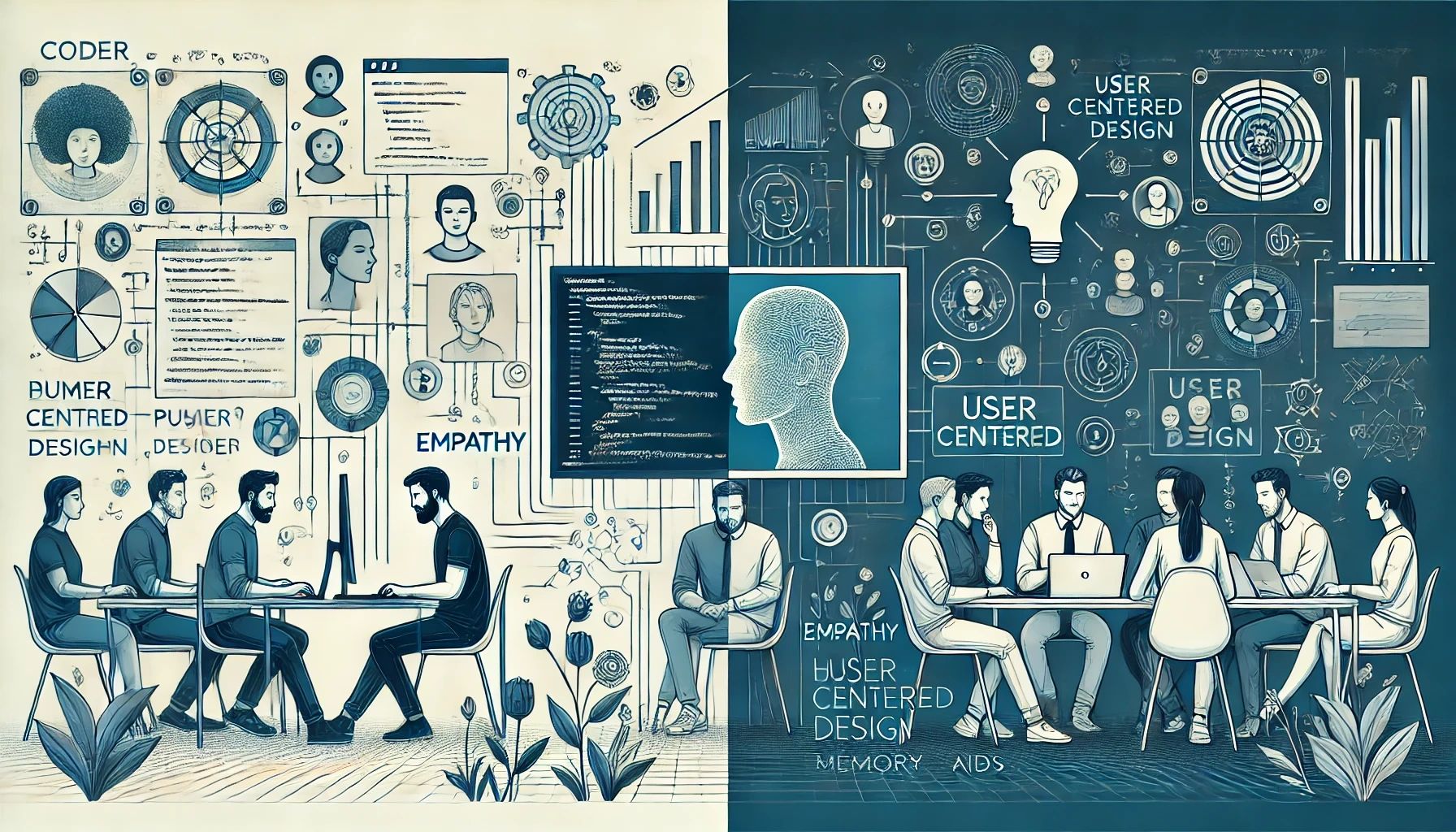
- Coders write code for the sheer thrill of it. They focus on the craft, sometimes obsessing over how clever their code is, even if it adds unnecessary complexity. This is a key driver of technical debt. Coders don’t always concern themselves with outcomes — they just want the code to "work."
- Engineers, on the other hand, are a different breed. Engineers design systems, understand user needs, and focus on outcomes. They don’t just build things; they build things that matter. Engineers solve problems, not just technical puzzles.
In a world where AI can increasingly handle the "coding" tasks, the role of an engineer — someone who designs thoughtfully, empathizes with users, and maintains quality — is more critical than ever.
The Code Is Just a Means to an End
Steve Jobs once said:
“You’ve got to start with the customer experience and work backwards to the technology. You can’t start with the technology and try to figure out where to sell it.”
That’s what we aim to do at voiceofreason.ai. We start with the person who’s struggling to remember their loved ones’ faces, the person who feels lost in a conversation, or the person who’s trapped in social isolation. We don’t build products to satisfy our technical curiosity; we build them to ease those people’s burdens.
Empathy Is the Engine
To build something truly useful, you have to step into the shoes of the people you’re trying to help. As Henry Ford once said:
“If I had asked people what they wanted, they would have said faster horses.”
Empathy helps you see beyond the obvious. At voiceofreason.ai, we work hard to understand what it feels like to experience memory loss or social isolation. We imagine what it’s like to forget your grandchild’s name or struggle to follow a simple conversation. That deep understanding drives us to create products that genuinely help people, not just fancy gadgets.
Building to Help, Not Just to Build
Most of my career, I’ve worked with good coders and good circuit designers. But good engineers? They’re rare. Because being a good engineer isn’t just about technical skill. It’s about humility, curiosity, and a relentless focus on the user.
The Roman philosopher Seneca nailed it when he said:
“If one does not know to which port one is sailing, no wind is favorable.”
If you’re just writing code without understanding who it’s for or what problem it’s solving, you’re like a ship drifting aimlessly. You might make progress, but you’ll never reach a meaningful destination.
The Challenge
So, I challenge you: Are you a coder, or are you an engineer?
Are you chasing the high of seeing your code work, or are you chasing the satisfaction of knowing you’ve helped someone live a better life? At voiceofreason.ai, we’re doing our best to be engineers. The people we’re trying to help deserve nothing less.
As we build tools like LifeBook, we’re not just coding. We’re crafting ways for people to hold onto their memories, connect with others, and live with dignity. And that, to me, is worth more than any endorphin rush a working piece of code could ever give.
The code is just the means. Helping people is the end.
Let’s never forget that.